


In 1898 the Department of Public Instruction developed a poster that was to be displayed in schools around Queensland to teach and enforce appropriate behaviour and manners to children. The rules were recited daily by students and were expected to be followed, to avoid a beating with the cane.
Transcript of “Good Manners” chart
‘Courtesy, Politeness or Good Manners, means kindly and thoughtful consideration for others. A Celebrated writer has said that a Boy who is Courteous and Pure is an honour to his country. Brave and Noble men and women are always Courteous. Three of the bravest and greatest men who ever live – the Duke of Wellington, General Gordon and General Washington – were distinguished for their courteous behaviour.
Courteous Boys and Girls will always be careful to observe the following RULES :-
As to themselves: Be Honest, Truthful, and Pure; Do not use Bad Language; Keep out of Bad Company; Keep your Face and Hands clean and your Clothes and Boots brushed and neat.
At Home: Help your Parents as much as you can, and do your best to please them; Be kind to your Brothers and Sisters; Do not be Selfish, but share all your Good Things.
At School: Be Respectful to your Teachers, and help them as much as you can – their work is very difficult and trying; Observe the School Rules; Do not “Copy”, nor Cheat in any way; Do not Cut the Desks or write in the Reading Books, etc; Never let another be Punished in mistake of yourself – this is Cowardly and Mean.
At play: Do not Cheat at Games; Do not Bully – only Cowards do this; Be Pleasant and not Quarrelsome; Do not Jeer at your Schoolmates, or call them by Names which they do not like.
In the street: Salute your Ministers, Teachers and Acquaintances when you meet them – they will Salute you in return; Do not Push or run against people; Do not Chalk on walls, doors, nor gates; Do not Throw Stones, nor destroy Property; Do not Annoy Shopkeepers by Loitering; Do not throw Slides on the pavement, nor throw Orange Peel or Banana Skins there – dangerous accidents often result from these practices; Do not make Fun of Old or Crippled people, but be particularly polite to them, as well as to Strangers and Foreigners
At table: Always Wash your Hands and Face before coming to the Table; Do not put your Knife to your Mouth; Look after Other People – do not Help yourself only; Do not be greedy; Do not Speak or Drink with Food in your Mouth; Turn your head away from the Table and put your Hand or Handkerchief before your Mouth when you Sneeze or Cough; Do not sit with your Elbows on the Table.
Everywhere: Never be Rude to anybody, whether old or younger, richer or poorer then yourself; Remember to say “Please” or “Thank-You”, “Yes, Sir” or Yes, Ma’am, “No, Sir” or “No, Ma’am”; Before entering a room it is often courteous to Knock at the Door – Do not forget to close the door quietly behind you; Always show attention to Older People and Strangers by opening the door for them, bringing what they require (hat, chair etc.), giving up your seat for them if necessary and in every possible way saving them trouble; Never Interrupt when a person is speaking; Always Mind your own Business; Be Punctual; Be Tidy.
Remember: All these rules respecting your conduct towards others are included in the one GOLDEN RULE, “always do to others as you would wish them to do to you if you were in their place”. Whenever, therefore, you are in doubt as to how you should act towards others ask yourself this question, “How should I like them to act towards me if I were in their place?” and then Do what your conscience tells you is right.’
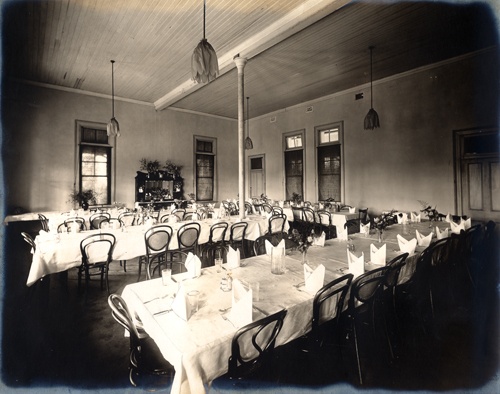
Ipswich Girls Grammar School Dining Room, 1925 – Image courtesy of Picture Ipswich